
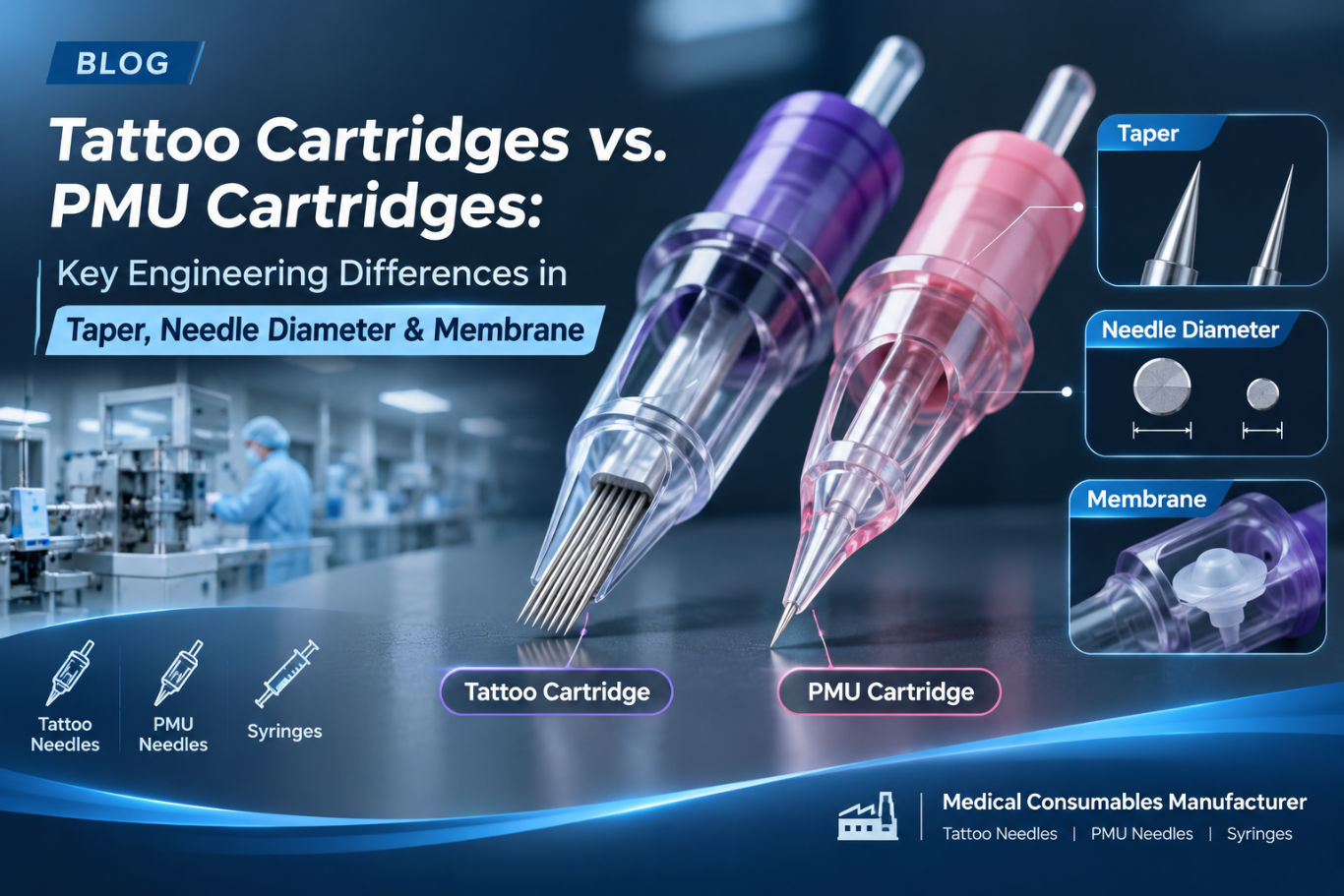
R&G Bio provides customers with high-quality tattoo needles and PMU cartridges. In our daily inquiries, we often receive questions from customers about these two products, such as “What is the difference between tattoo needles and PMU cartridges?” “Can they be mixed?” “How do I choose the needle type?”
Tattoo needles and PMU cartridges may look very similar in appearance, and their fittings are usually universal. They can even function normally, when they are installed in the same rotary pen machine. However, being able to operate does not mean they can be mixed-use. Although their differences do not lie in appearance and fitting, they will be reflected in details such as needle diameter, taper, and safety membrane. Improper use can directly affect the tattoo or beauty effect, causing great inconvenience to customers. This article starts from the perspective of a professional manufacturer, telling everyone the differences between two types of needles and their adaptation logic with the Rotary Pen.
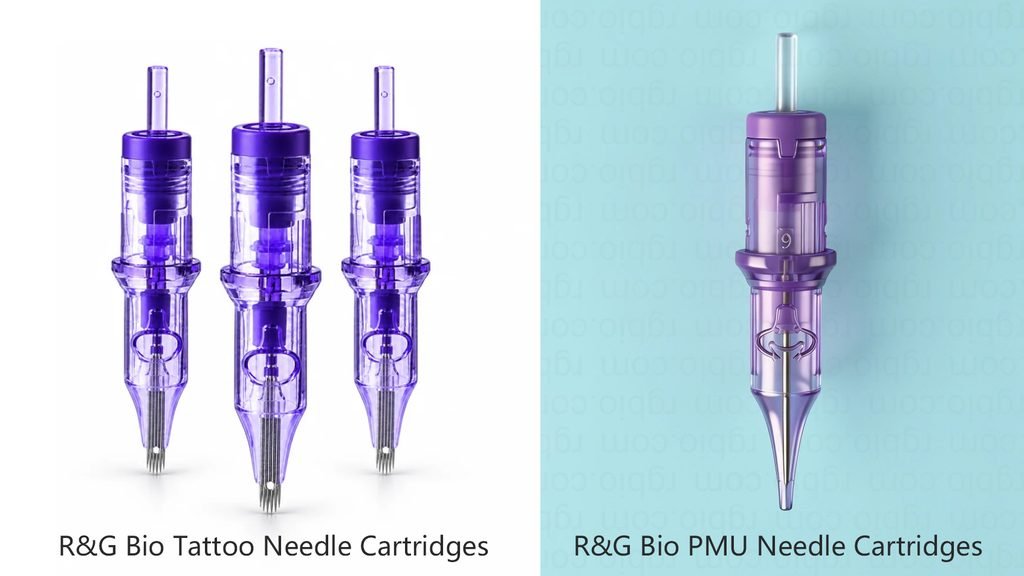
Quick Answer: Can You Swap Tattoo and PMU Cartridges?
Conclusion
They are highly likely to be installed on the same rotary pen machine, but it is highly recommended not to mix them up in practical operation!
PMU Cartridges
- Features: The needle diameter of the PMU cartridge is finer (0.18-0.25mm), the taper is longer, and the safety membrane is softer
- Design purpose: Facial skin is thin and fragile, which can reduce skin trauma and slow down pigment deposition.
Tattoo Cartridges
- Features: The needle diameter of the tattoo cartridge is thicker (0.30-0.35mm), the taper selection is more efficient, and the membrane tension is higher,
- Design purpose: To quickly color the body skin and complete large tattoo patterns more quickly.
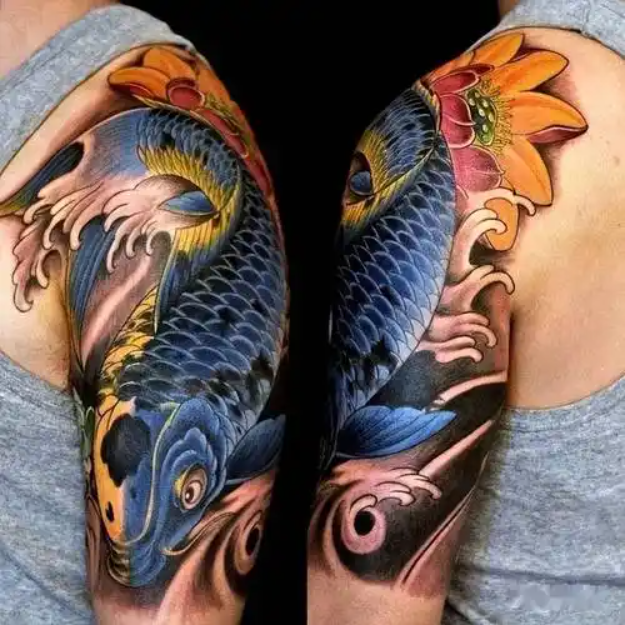
Using tattoo needles on the face can cause more pain for clients, leave greater trauma on the face, slow healing, and even pose a danger; However, using a tattoo needle on the body will directly affect the drawing of the tattoo pattern. The lines drawn by the tattoo needle are finer, and pigment is applied in small amounts over multiple passes. Using it on the body will only slow down the tattoo efficiency and delay the customer’s time.
|
Comparison item |
PMU cartridge |
Tattoo cartridge |
|---|---|---|
|
Common needle diameter |
0.18–0.25mm(#6–#8) |
0.30–0.35mm(#10–#12) |
|
Common taper types |
Mainly with a long taper |
Short and medium taper are the main types, and long taper can be used for lines |
|
Safety membrane tension |
Low (soft), light rebound |
High (hard), strong support |
|
Needle insertion logic |
Shallow implantation, with small amounts of pigment deposited over multiple passes and layers. |
high saturation in one pass, fast coverage |
|
Typical models |
Low voltage, short stroke PMU pen machine |
Tattoo pen machine with a stroke of 3.5-4.2mm |
|
Target effect |
Delicate gradient, low trauma, natural healed color result |
Sharp lines, even shading, high coloring efficiency |
Same Shell, Different Logic: How Tattoo and PMU Cartridges Are Built Differently
There is actually an appearance standard in the industry, which is the Cheyenne-style bayonet fitting standard. This standard defines the outer dimensions of the cartridge housing, drive bar, and needle tip. Most manufacturers use this standard to design and produce tattoo needles and PMU cartridges, so most rotary pen machines on the market can be compatible with both tattoo needles and PMU cartridges.
Although the standards makes the cartridge shells look similar, there internal structures still have some significant differences. The internal structure should be designed according to the purpose of the needle: the diameter of an individual needle, the taper of the needle tip, and the tension of the safety membrane.
Needle Diameter: Why 0.18–0.25mm vs. 0.30–0.35mm Changes Everything
What Diameter Actually Controls
Needle diameter refers to the thickness of an individual needle. The needle diameter will directly affect:
Simply put, you can choose the needle diameter based on whether you want delicate lines or efficient coloring.
The PMU Range (0.18–0.25mm): Precision for Facial Skin
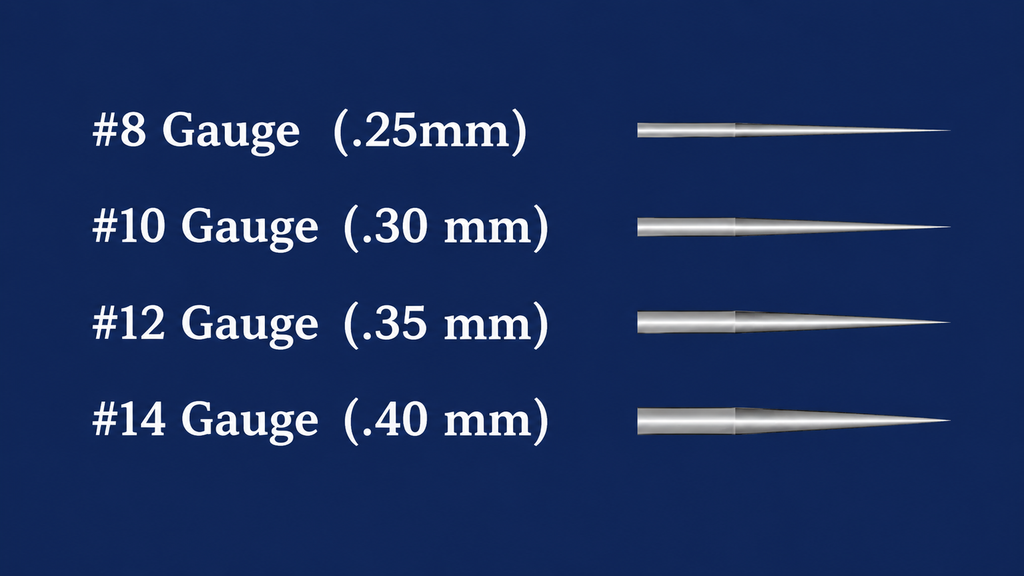
The skin on the face is much thinner than the body, especially the eyebrows, eyes, and lips. Coloring needs to follow the logic of “a small amount multiple times” in order to better deposit pigments. A fine needle of 0.18-0.25mm, combined with low-voltage operation, can achieve the effect of small puncture wound, less bleeding and tissue fluid leakage, fast recovery, and more natural healed color result. The commonly referred to ranges in the industry are # 6 (0.20mm) and # 8 (0.25mm).
If the needle diameter becomes thinner, the PMU work can be more delicate, but naturally, the efficiency will also decrease. The same shading area requires more passes to complete, and such fine patterns also require higher technical and manual skills from the operator, making the usage threshold very high.
The Tattoo Range (0.30–0.35mm): Saturation and Coverage for Body Skin
The skin on the body is much thicker than on the face, and when choosing a needle type, the focus is more on color saturation and color coverage. The thick needles of 0.30mm (# 10) and 0.35mm (# 12) have good rigidity and sufficient pigment load, and can provide sufficient pigment load with just one pass of the needle.
What Happens When You Use the Wrong Diameter
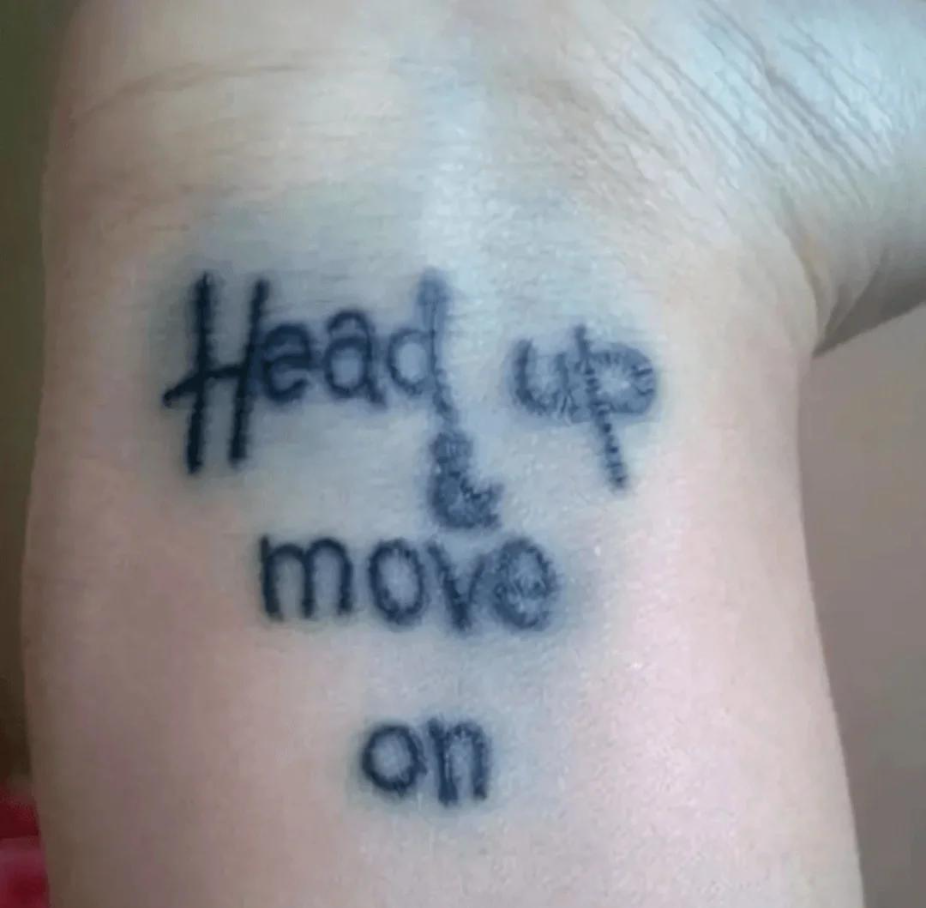
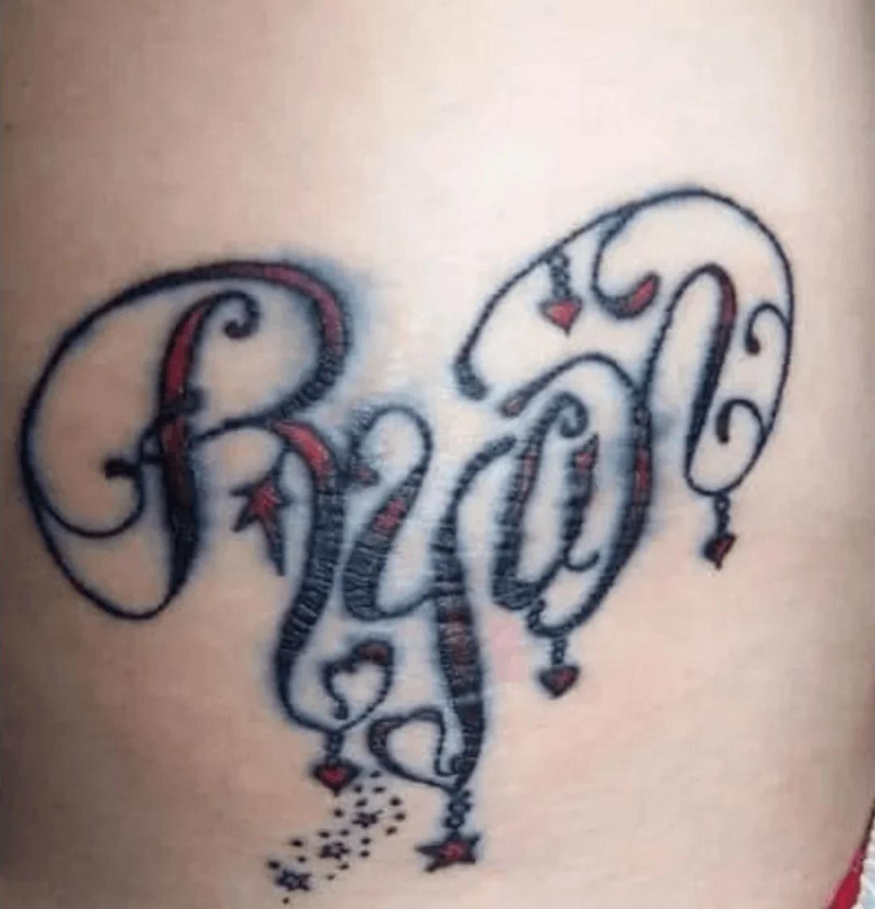
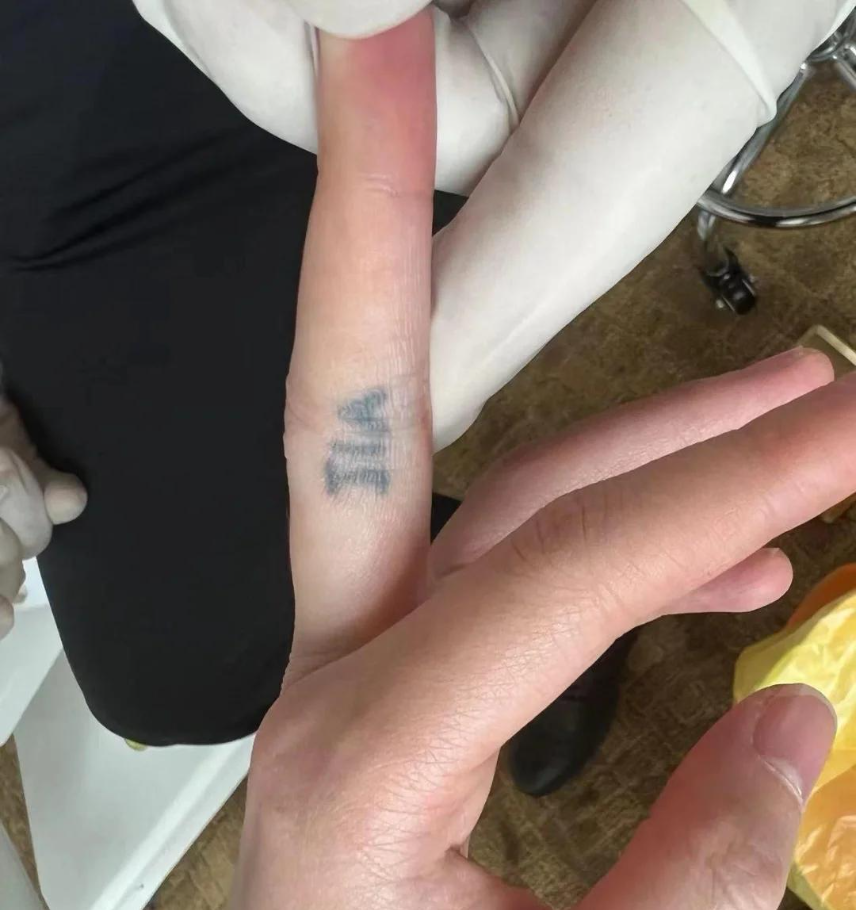
If a needle with a thickness of 0.30mm or more is used on the face, not only will the wound be large and there will be a lot of exudate, but the pigment is also prone to smudging under the skin, making it more likely to turn blue and gray later on; Using a 0.18mm fine needle for the large pattern on the tattoo body will greatly slow down the efficiency of the tattoo because the single needle has too little pigment load, and can only be repeated to make up for the pigment load. In the end, it may even cause greater trauma, wasting time and harming the customer’s skin. So mixing the two is not cost-effective at all.
Taper Length: How Long and Medium Tapers Shape Depth and Skin Trauma
Taper Is Not Depth
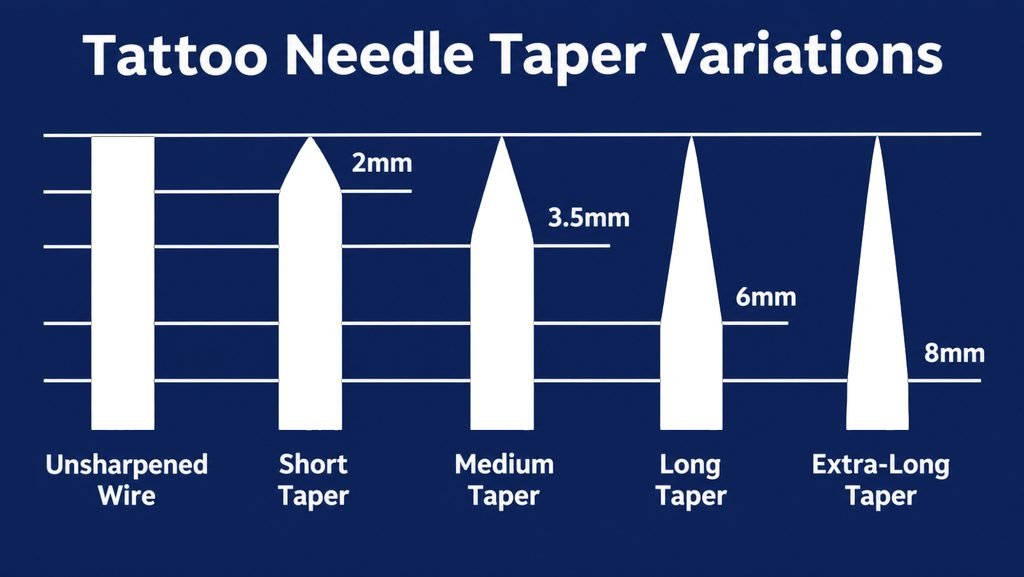
People often misunderstand taper as the depth of needle insertion, but in fact, the two have nothing to do with each other. Taper refers to the sharpness of the needle tip. The longer the taper, the sharper the needle tip, and the narrower the puncture wound after piercing the skin. The slower the flow of pigment from the needle tip, the more concentrated the color.
Tip
There is no unified standard for the length of taper in the industry. LT/MT/ST are relative lengths marked by each manufacturer, so when selecting, it is still necessary to choose according to actual needs.
Medium Taper: The All-Rounder for Controlled Implantation
Medium taper is the most commonly used because it balances the flow rate of pigments and wound control, and most shaping and conventional lines can be well completed. If a tattoo artist is only equipped with one taper, it is usually a medium taper.
Long Taper: Slower Pigment Flow, Smaller Wound Channel
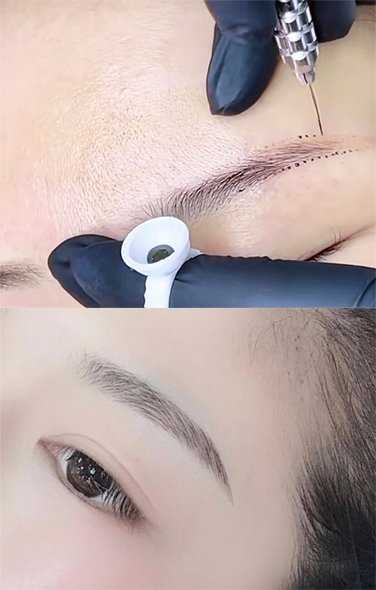
Long taper makes narrower wound, and the flow rate is slower, so coloring needs repeated layers.So, long taper can create a delicate mist and natural gradient. PMU cartridges often use this long taper, which is most suitable for hair-stroke brows, pixel-style powder brows, and lip gradients. And because the taper is longer, more of the needle tip is exposed beyond the cartridge housing. which makes it easier for the operator to see the entry point of the needle, and reducing deviation and errors.
Short Taper: Fast Saturation at a Cost
The needle tip with a short taper is blunt, leaving a wider puncture wound, but it also has enough pigment, making it very fast to color and suitable for linework and large-area coloring of
body tattoos. However, this can also lead to greater skin trauma, making it difficult to use on the face, especially in areas that require precise control.
Summary
Tattoo cartridges pursue efficiency in the selection of taper, while PMU cartridges pursue precise control in the selection of taper.
Membrane Tension: The Overlooked Difference Inside the Cartridge
What the Safety Membrane Does
The safety membrane is a crucial structure in tattoo needles. Main functions of safety membrane:
Prevent the backflow of pigments and tissue fluids into the pen machine, avoid cross contamination, and ensure hygiene and safety
Provide rebound force, allowing the tattoo needle to move back and forth stably under the drive of the motor
Provide shock absorption to the tattoo needle, reduce the shaking caused by high-speed movement, ensure that the lines of each tattoo are as consistent as possible, and reduce uneven liquid discharge.
Soft vs. Firm Membranes: Rebound Feel and Pigment Flow
Soft membrane
Compatible with PMU cartridges. Soft membrane has light rebound, low resistance, and can work smoothly even under low voltage. It has a delicate touch and is suitable for fine and gentle operation of PMU.
Firm membrane
Compatible with tattoo needles. The power of tattoo machines is high, and tattooing takes longer than PMU work, so it requires stronger support from the firm membrane. If the firm membrane must be installed on a low-voltage PMU machine, there may be weak needle output and inaccurate coloring.
Why PMU Cartridges Typically Run Lower-Tension Membranes
As for why the PMU pen machine can only adapt to low-tension membranes, it is because the working voltage of the PMU pen machine is low and the stroke is short. The force that the motor can output is already limited, and the resistance of the membrane must be adjusted downwards accordingly. Otherwise, the load will be fully pressed on the motor, which will cause problems with the needle output force and increase noise and vibration.
So the membrane tension is not randomly matched, but needs to be designed according to the voltage and usage process of the machine. We also adjust the material and hardness formula of the membrane separately when producing PMU needles and tattoo needles.
Matching Cartridges to Your Rotary Pen: A Compatibility Framework
Universal vs. Proprietary Fittings
When purchasing tattoo needles and PMU cartridges, you must check the fitting first.
Most of the cartridges on the market use Cheyenne-style universal bayonet fittings, which can be installed on most pen machines. But there are also many PMU machines that use special dedicated fittings (screws, dedicated buckles) and can only be equipped
with specified models of needles.
Stroke Length and Voltage Windows
Then, check the stroke length and voltage of the machine.
PMU pen machines usually have a short stroke (2.5-3.0mm) and low voltage; Tattoo pens often have a stroke of 3.5-4.2mm and a wide voltage range.
“Stroke Length” Introduction:
The longer the stroke length, the greater the amplitude and speed of the needle move in and out the skin. The actual performance wiil be completely different, when installing the same needle on the short stroke machine and the long stroke machine.
Why a Fine PMU Needle on a Long-Stroke Pen Causes Over-Penetration
What would happen if installing a tattoo needle with a smaller diameter on a long stroke tattoo pen? For example, installing a 0.18mm fine needle on a 4.0mm stroke tattoo pen.
Low needle rigidity ➡️ Long stroke results in deeper needle penetration and higher impact speed ➡️ The fine needle may displaced or even bent under the stronger impact ➡️ The operator cannot control the needle consistently. Sometimes it penetrates too deeply, and sometimes it does not penetrate deep enough.
If installing a thick needle with a firm membrane on a low-voltage PMU machine, the machine may not be able to push the membrane, and the needle movement may become weak, , and the pigment may not be deposited properly.
A Quick Pairing Matrix
The following adaptation matrix can serve as a quick reference for daily selection:
|
Application scenarios |
Recommended needle diameter |
Recommended taper |
Membrane tension |
Suggested stroke length/voltage |
|---|---|---|---|---|
|
Eyebrow lines/powder brows |
0.18–0.25mm |
Long taper |
Low (soft membrane) |
2.5-3.0mm stroke length, low voltage |
|
Eyeliner/lips |
0.18–0.25mm |
Long/medium taper |
Low (soft membrane) |
2.5-3.0mm stroke length, low voltage |
|
Scalp micropigmentation (SMP) |
0.20–0.30mm |
Medium/long taper |
moderate |
3.0-3.5mm stroke, medium voltage |
|
Tattoo linework |
0.30–0.35mm |
Medium/long taper |
High (firm membrane) |
3.5-4.2mm stroke, wide voltage |
|
Tattoo shading/filling |
0.30–0.35mm |
Short/medium taper |
High (firm membrane) |
3.5-4.2mm stroke, wide voltage |
FAQ
Choosing the Right Cartridge: A Manufacturers Checklist
As a manufacturer, we recommend selecting according to four steps:
Determine the location
The delicate facial parts (eyebrows, eyes, lips) or the body? This step directly delineates the needle diameter range.
Determine the technique
Lines or shading? The line has a long taper, and the efficiency of coloring can be prioritized by considering short and medium taper.
Look at skin type
For customers with thin and sensitive skin, lean towards the direction of fine needles, long tapers, and soft membranes; For thick and oily skin, it can be relaxed appropriately.
For the machine
Confirm the interface type, then check the stroke and voltage range, and finally match the membrane tension.

R&G BIO
R&G Bio simultaneously produces two product lines, Tattoo Needle Cartridges and PMU&Cosmetic Needles. From needle wire selection, taper grinding to safety membrane formulation, they are designed and tested according to their respective real working conditions. If you have specific questions about selection or OEM/ODM customization needs, you are more than welcome to visit our website. You can view product details or contact our technical team directly.